The Photos Your Website Actually Needs
A one-person business does not need a studio shoot. Clear photos of the real shop, van and work beat fuzzy snaps and borrowed stock. Free stock gets used everywhere and paid libraries add up. AI can remove a lamp post or a passer-by, but it should not invent the business. Keep it real, do your best, and go live with what you already have.
A blurry photo of the van can do more damage than leaving the picture off the page.
That is the part most owners get the wrong way round. The website is the shop window of the business online. It needs to look professional. It does not need to look like a brand with a photographer on retainer. A one-person business is allowed to look like one. Customers already know that. What they cannot forgive is a page that feels careless.
The photos do not have to be perfect. They do have to be clear.
A few pictures beat a gallery of noise
The useful set is small. Work that has already been done. The place people will walk into. The van they will see on the drive. A face, if that feels comfortable.
Not fifty shots. Not a carousel that crawls on a phone. A handful of honest pictures that answer the quiet question every new visitor has: is this a real business, and does the work look like the work they want.
Client photos help when they exist. A finished kitchen. A tidy garden. A result that looks like the one in the chair, not a stock model. People trust evidence more than adjectives.
Phone photos are fine. Fuzzy ones are not.
For a lot of businesses starting out, the only pictures sit on a smartphone. That is not a problem. Modern phones take sharp images in decent light. The hurdle is not the camera. It is using whatever is already in the roll without looking at it properly.
A dark, shaky shot of a job at dusk does not prove skill. It makes the page feel unfinished. The same job, taken in daylight, from a step back, with the mess out of the frame, does the opposite. Same phone. Different five seconds.
Avoid the obvious pitfalls. Out of focus. Crooked. A thumb in the corner. A reflection that hides the work. Those can be worse than no image at all. They still take up space and they still set a first impression. If a photo would not be sent to a customer on WhatsApp, it does not belong on the website.
Make an effort on the ones that will travel. A shop-front photo is not only for the website. It ends up on Google, on directories, on Facebook, and on any site that points back to the page. Worth getting that one right. Stand across the road. Wait for a gap in the parked cars if it is possible. Take three and keep the cleanest.
Easy starters that already exist
Not every trade has a polished portfolio. Most do have something that already looks like the business.
For a location-based business, a view of the shop-front or the office is an easy first image. People want to know they will find the door. A tidy exterior, even a modest one, does that job.
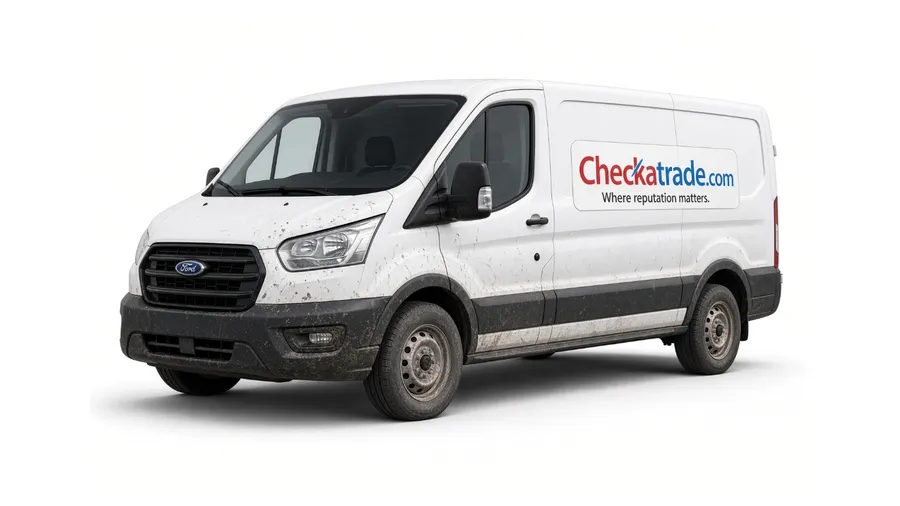
For trades, an image of the sign-written van can be as effective as anything. It is proof of a real outfit. A van with the name on the side, parked on a job, beats a stock photo of a smiling plumber that belongs to nobody.
One close-up of clean work sits next to that. A before-and-after if both shots are sharp. One good completed job is worth more than ten average ones.
Profile pictures are always a good idea if the shyness can be put to one side for a minute. A simple head-and-shoulders shot in ordinary clothes, in good light, makes the contact form feel like it goes to a person. Customers like knowing who will turn up. A logo on its own does not do that. Nobody needs a studio backdrop. A plain wall, a van, or the doorway is enough.
Stock and AI have a place. They are not the business.
Stock images can be a useful fallback when a real shot does not exist yet. A simple background, a clean texture, or one extra picture so the page is not empty. That is the job they are good at. Do not lean on them for the whole site.
The free ones get used a lot. Visitors have seen that handshake, that toolbox, that smiling couple on the sofa. Paid libraries look better and cost more, and the bill climbs if every section needs a new picture. Either way, a page built from other people’s photos starts to look like every other page.
AI can help in a narrower way. Tidying an existing image. Taking out an awkward lamp post. Removing people walking past the shop-front. Brightening a shot that was almost there. That is enhancement of something real. Generating a fake van, a fake kitchen or a face that does not exist is a different thing. It tries to make the business look like something it is not, and customers notice when the photos and the real visit do not match.
The rule is simple. Keep it real. Do not pretend to be a bigger firm than the one that will turn up. Do the best with the pictures that already exist.
The site also does not need every job ever done. A short page with five strong pictures will out-perform a long scroll of mixed quality. OnePageSites builds that kind of page on purpose. Fast on a phone. Room for the photos that matter. A clear way to get in touch underneath.
Look at the Examples if it helps to see how little is actually required. The sites that work are not the ones with the most images. They are the ones where each image has a job.
Live first, then swap in better shots
Most owners do not want an evening spent cropping files and guessing sizes. That is the technical headache a simple site is meant to remove.
Send whatever already exists. Phone photos, a van shot, a shop-front, a logo if there is one. The usable pictures go on the page. The ones that would let the site down stay off it. If there are only two decent images on day one, the page can still go live. Empty space is cleaner than a bad photo filling it.
Better pictures can replace the first ones later. A new job comes in. The light is good. Three photos get sent through. The site updates. Waiting for a perfect set is how the website stays on the list for another year.
A short check before anything is sent: stand back so the whole subject is in the frame, use daylight where possible, hold the phone still, and look at the shot on a bigger screen if there is one. What looks sharp on a two-inch preview can fall apart on a laptop.
One clear face. One clear place. A few clear examples of the work. That set covers almost every small business that needs a simple website.
Put the shop window up
Those pictures will not only live on the website. Google listings, Facebook pages and directories all borrow from the same small set. A sharp shop-front and a decent van photo work everywhere. A fuzzy one works nowhere.
None of this requires a design course. It requires a short walk outside with the phone, and the honesty to leave the worst shots in the camera roll.
OnePageSites will build the page around what is sent. The layout stays simple. The photos stay large enough to read on a phone. The contact form sits where people can use it. When a better picture arrives, it can replace the older one without rebuilding the whole site.
If the current photos feel thin, that is still not a reason to delay. Send the best two or three and say what is missing. A stock fallback or a tidy-up of a real shot can fill a gap. The site should still look like the business that will answer the phone.
See the Examples for the kind of practical pages this produces. When it is time to get the shop window online, Get in Touch and send the pictures that already exist. The rest is handled without the technical mess.